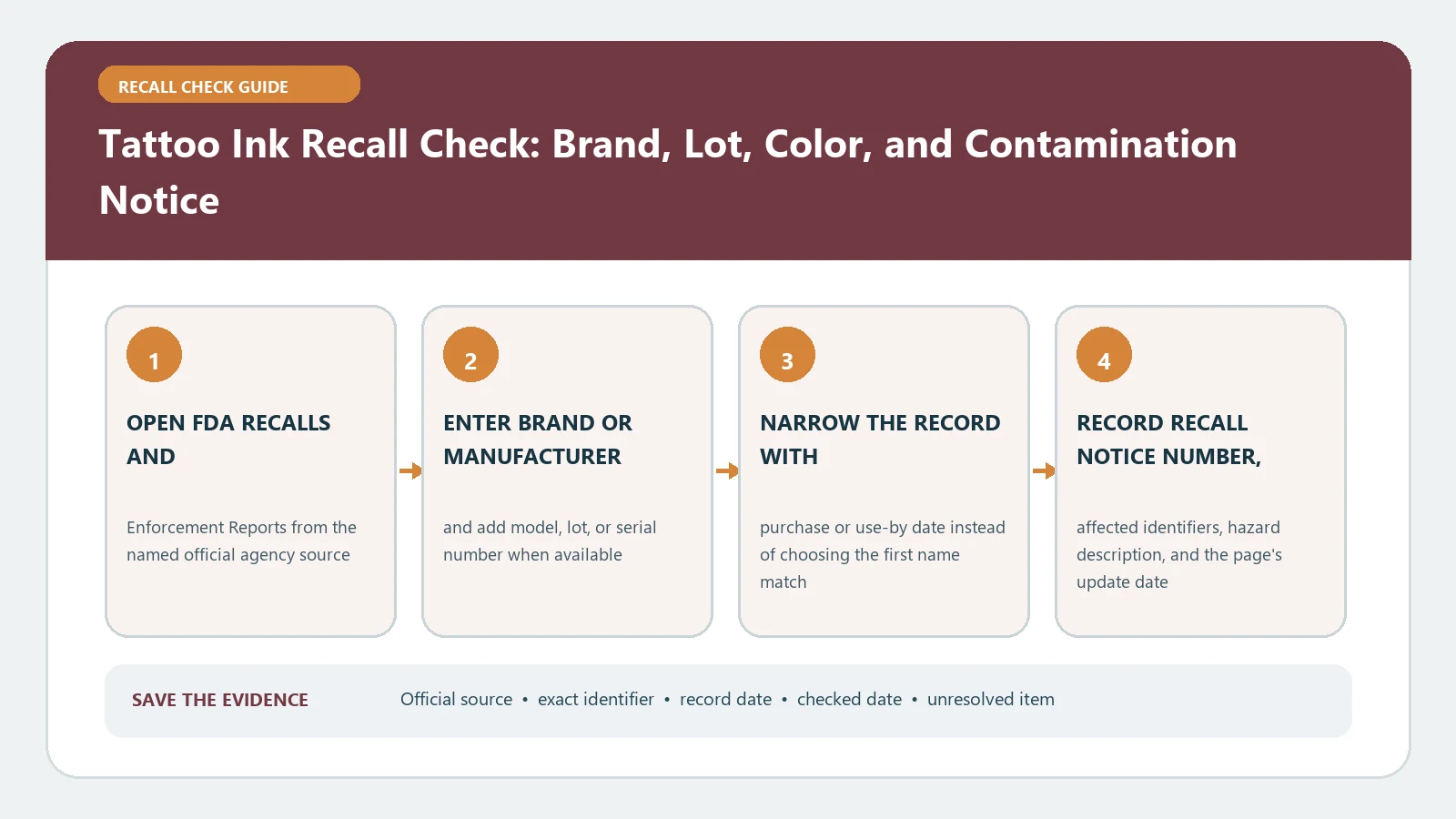
Match tattoo ink by brand, exact color, lot or batch, bottle size, and any best-before date before applying an FDA contamination notice. Photograph the bottle and diluent label, open the current FDA recall or safety alert, and compare every named field. Ink can be contaminated even when a sealed bottle looks normal, but a similar color or brand family does not prove that a different lot is affected.
Last checked August 26, 2026. FDA may add product photographs, expand an alert, or post a later company announcement. Studios and consumers should use the live notice rather than a cropped social image or an undated list.
Capture the bottle and batch before the studio discards it
Photograph the front, back, cap, bottom, barcode, lot panel, color name, manufacturer or distributor, volume, and best-before or expiration date. If the ink was poured into a single-use cup, keep the source bottle information and appointment record without reusing contaminated materials. Record diluent or mixing solution separately because it may carry another lot and manufacturer.
| Evidence item | Why it matters | What it cannot prove alone |
|---|---|---|
| Brand and manufacturer | Locates the official announcement | That every product from the company is affected |
| Color or pigment name | Separates products in the same line | That similar-looking ink is the same product |
| Lot or batch | Defines the production scope | That another lot shares the problem |
| Best-before date and size | Confirms a notice condition | That an unlisted size is included |
| Appointment and artist record | Connects an exposure to the bottle used | That the ink caused a symptom |
Search by brand and color, then confirm the lot
- Open FDA’s Recalls, Market Withdrawals, and Safety Alerts page and search the brand or manufacturer.
- Filter or inspect the result for cosmetics and tattoo ink rather than relying on a general web snippet.
- Open the full announcement and compare product name, color, lot, date, size, photographs, and distribution details.
- Read the audience and recommendation sections to distinguish consumer, artist, and retailer actions.
- Save the exact notice URL and the field that produced the match or exclusion.
Some FDA pages are company recall announcements posted as a public service; others are agency safety advisories. Note which type you are reading. The source and wording matter when deciding who issued the action and where later updates may appear.
Search spelling variants when a product line uses stylized names, but never relax the final comparison. Color labels such as black, raven black, lining black, and matte black can describe separate formulas and lots. Use the exact product table or photographs in the alert to settle which label is included.
Contaminated ink may look ordinary in a sealed bottle
FDA’s tattoo safety guidance explains that microorganisms can be present even when a container is sealed or labeled sterile. Visual inspection therefore cannot clear a lot named by an alert. The reverse is also true: cloudiness, separation, or a damaged seal may be concerning, but appearance alone cannot prove that an unlisted bottle belongs to a specific recall.
Do not open or smell a bottle to test it. Isolate affected studio inventory, prevent further use or sale, and follow the manufacturer’s or FDA’s stated handling route. Keep the label readable until the case is documented.
Trace opened and unopened bottles separately. An opened bottle may have been used across several appointments, while an unopened bottle still belongs in the inventory count. Do not pour affected ink into another container for storage; that destroys the label relationship and can create another exposure route.
Consumers, artists, and retailers have different next steps
A consumer considering a tattoo can ask the studio for the brand, color, and lot before the procedure and avoid a product named by the notice. An artist should stop using the affected product as instructed, identify appointments linked to the lot, preserve purchase and supplier records, and follow any notification direction. A retailer or distributor needs to control remaining inventory and the downstream records required by the announcement.
For permanent makeup, record the pigment and any mixing products in the same way, but do not assume a body-art alert automatically includes every permanent-makeup shade. The FDA page defines the product scope. Local licensing or studio rules may add obligations without changing which lots the federal notice covers.
Do not promise that a refund, replacement bottle, or negative studio search resolves a health question. The product remedy and a person’s care are separate tracks.
A skin reaction needs clinical attention, not a database verdict
FDA advises people with a rash, poor healing, bumps, fever, or another suspected tattoo reaction to contact a health care professional and notify the artist so the ink can be identified. Preserve the ink brand, color, lot, appointment date, body location, photographs, and care received. Do not use a recall match to self-diagnose an infection or assume that no match rules one out.
An adverse-event report can provide regulators with useful evidence, but it does not replace medical care and does not establish causation for an individual case. Avoid placing unnecessary personal information in public-facing records.
If the bottle or lot number is missing
Ask the studio or supplier for the purchase invoice, bottle photograph, batch log, color inventory, appointment record, and distributor notice. Search the FDA page by brand and color to find possible alerts, but keep the outcome unresolved until the lot or another accepted identifier is recovered. Do not copy a lot number from a product image, and do not assume all inks used during one appointment came from the same batch.
Keep an exposure and inventory closure record
Retain the FDA notice, product photographs, quantity isolated, supplier response, disposal or return confirmation, appointments checked, and the date the studio inventory was cleared. The cosmetic recall check helps route other FDA-regulated cosmetics without treating them as tattoo ink. For a broader alert-to-record workflow, use the FDA recall list guide.
A studio closure record should show how many bottles were found, which were opened, which appointments were reviewed, and who confirmed the final disposition. Keep replacement inventory separate from the affected batch. Receiving a new bottle does not prove the old lot was removed from every workstation, travel kit, storage cabinet, or artist’s personal supply.