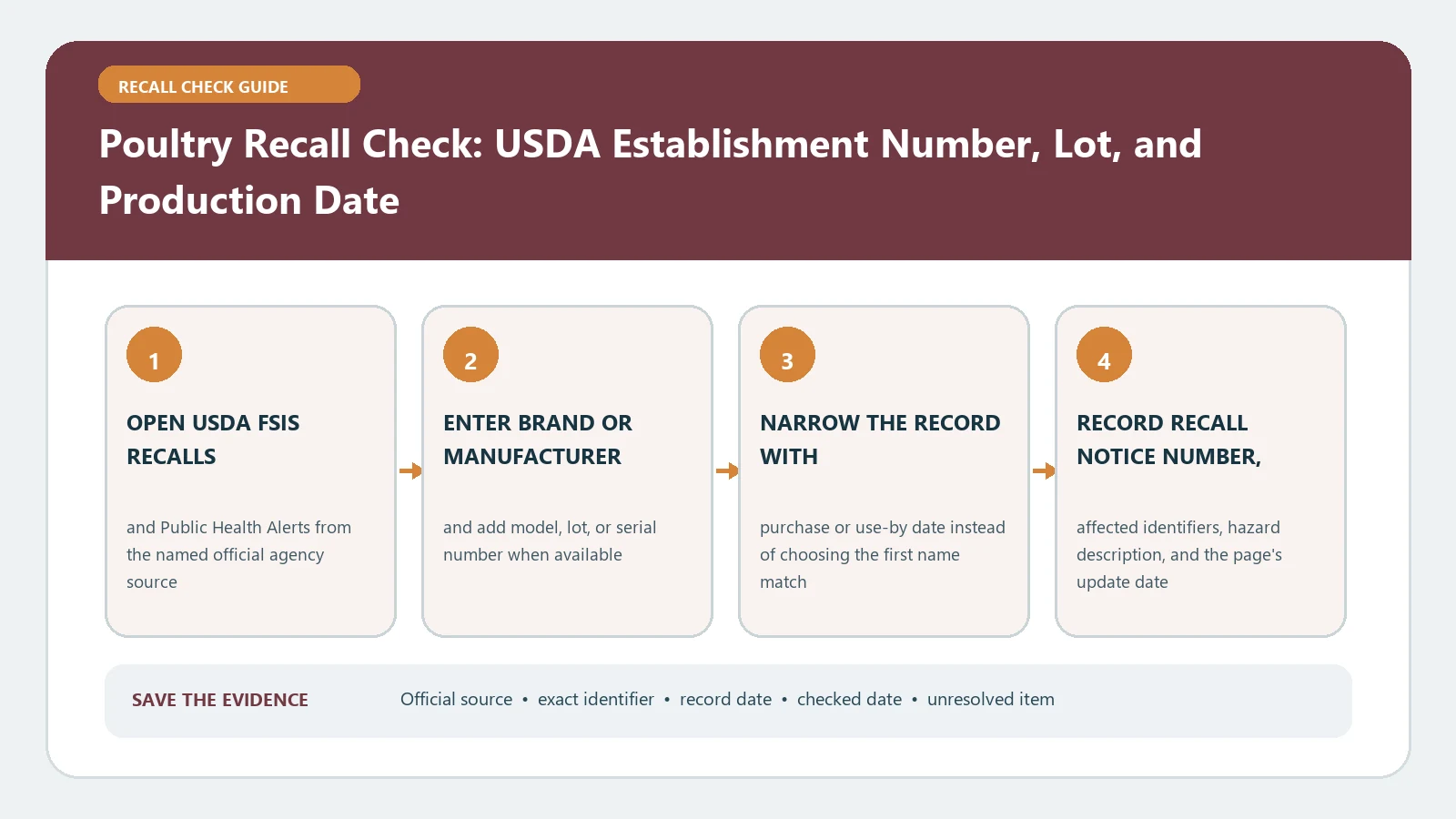
For a poultry recall check, copy the full establishment code printed inside or near the USDA inspection legend, then compare it with the product name, lot or case code, package size, and production or sell-by dates in the FSIS notice. The establishment code by itself does not identify an affected package.
Keep the USDA mark and package dates together
Photograph the front, back, USDA inspection legend, and any ink-jetted or stamped code before discarding packaging. Record:
- Exact product and brand names
- The complete establishment code as printed
- Lot, case, production, freeze-by, use-by, or sell-by code
- Package weight, count, and whether the product is ready-to-eat
- Purchase location and date
Search USDA FSIS records
Use the USDA FSIS Recalls and Public Health Alerts page for poultry products. If the inspection code is difficult to recognize, consult USDA’s establishment-number guide. Search the establishment code with the brand or product name, then open the detailed notice.
Why one establishment number is not enough
One facility can produce multiple products and date ranges. Confirm the named poultry item, package configuration, affected dates, lot or case identifiers, and any distribution limits. Do not mark a product affected merely because its inspection legend contains the same establishment code.
When the original package is missing
For deli, restaurant, institutional, or repacked purchases, ask the seller for the supplier case label, establishment code, lot, and delivery date. A receipt can narrow the purchase window but cannot replace the production identifiers used in the FSIS notice.
Use only the action stated by FSIS
Consumer instructions differ by notice. Do not invent a return, disposal, or preparation step when the detailed FSIS record does not provide it. Reopen the matching notice and use the agency or recalling establishment contact route. A no-result search does not prove that the food is unaffected, especially when the package code is missing or an alert has just been issued.
For a fuller explanation of USDA records, see the USDA FSIS recall check.
Source pages checked: September 1, 2026 — USDA FSIS Recalls and Public Health Alerts and the USDA establishment-number guide.